
This blog was written by Mosaic Environmental Fund, in partnership with Blue Sky Funders Forum
Last year, when the Trump administration moved to sell off public lands as part of the
“One Big Beautiful Bill Act,” opposition poured in from across the political spectrum.
That response reflected something important about nature and outdoor access: they remain one of the few bipartisan environmental issues, with large majorities of Americans expressing support for public lands across political identities and geographies.
Broad support does not equal power
Over the last eighteen months, federal protections have been steadily dismantled, including most recently an executive order removing three million acres from Bears Ears and Grand Staircase-Escalante National Monuments. These actions will have huge implications for outdoor access across the U.S. from overcrowding and degradation of national parks to pollution of lands and waterways that support both recreation and local economies.
This disconnect between what people value and the policies being implemented speaks to a major challenge for environmental and outdoor advocates: how do we turn widespread public support into the civic power needed not only to win high profile fights, but to set a long-term agenda for protecting public resources that transcends partisan politics?
Outdoor equity and access is well positioned for this work as a cross-sector issue with a diverse array of community leadership, strong narrative resonance, and broad national support. But that breadth only becomes meaningful when organizations have the capacity to work across sectors and constituents.
The need for collaborative infrastructure
Mosaic Environmental Fund — a national collaborative fund and field catalyst focused on supporting power building across the breadth of the climate and environmental movement — did an analysis last year of nearly 1000 applicants to their open grant call. The report identifies key gaps and opportunities to invest, including:
- State and regional approaches are central to how groups — including national organizations — are implementing their strategies, yet remain underinvested in.
- Over a quarter of projects emphasized rural communities, highlighting a gap in support for organizing and advocacy in this demographic.
- Field fragmentation continues to be a major impediment to progress, causing siloed advocacy and inefficient resource use and ultimately limiting collective impact. Groups have clear strategies to mitigate this, and are actively seeking resources to bolster collaboration, inclusive decision-making, and pluralism as ways to build power.
- Deep fragmentation and siloed coordination also weaken advocates’ ability to develop cohesive narrative strategies, reinforcing the need for collaborative infrastructure in this area.
- Social change leaders often operate with limited resources and are organizing within increasingly authoritarian political landscapes. They need skills, shared infrastructure, and resources to strengthen advocacy and organizing, hold coalitions, and build bridges across differences.
Taken together, these findings point to the importance of the connective tissue between organizations: relationships, shared strategy, communications capacity, convening, and trusted intermediaries.
What this looks like in practice
In Wyoming, the Wyoming Outdoor Council is using funds from Mosaic to strengthen coordination with other local conservation groups and the Wyoming Civic Engagement Network through relationship building, in-person meetings and planning sessions, and resource sharing.
The goal is to build durable community-focused power to advocate for access to clean water, air, and lands; Tribal sovereignty; and wildlife.
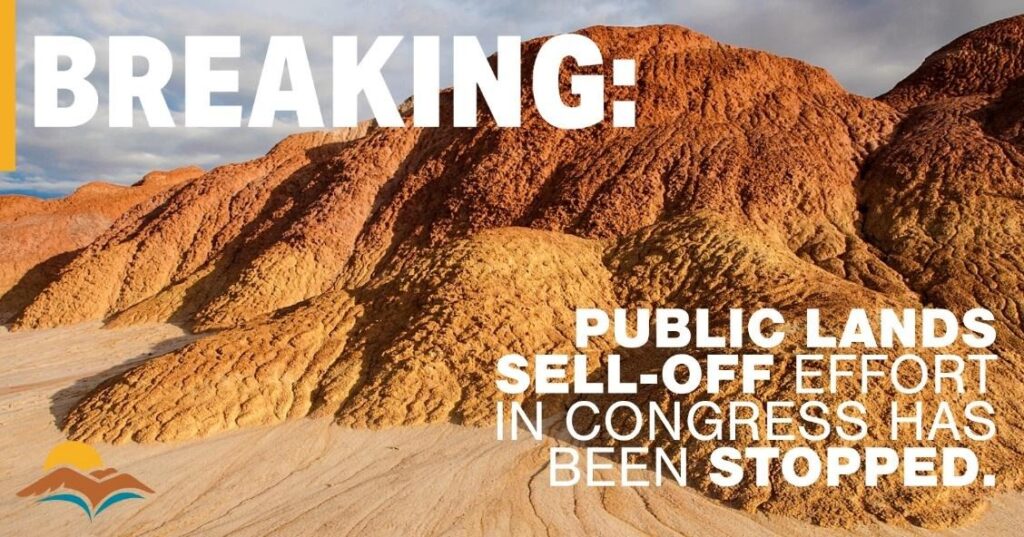
That coordination has value when threats emerge. Advocacy from groups and communities across the state helped stop the public lands sell-off last year, and the Wyoming legislature passed a resolution in 2026 declaring public lands essential to the state’s economy, heritage, and culture.
A lesson for philanthropy
For funders, the implication is clear: investments in projects that foster cross-sector collaboration and help groups bridge to new audiences will help protect nature and outdoor access in the short term, while building a long-term base of power to embed it as a shared public good.
At Blue Sky Funders Forum, part of our role is to create space for funders to learn from one another, connect across issue areas and geographies, and explore how philanthropy can strengthen the broader field for outdoor access and equity. Collaborative infrastructure is one of the areas we believe deserves deeper attention.
For funders interested in learning more about the organizations and strategies surfaced through Mosaic’s open grant call, contact Maya Berkowitz: maya@mosaicenvironment.org